Welcome to the seventh issue of Agents in Practice! This week I have the “One-liners” section again. Until now, I have intentionally omitted news that is discussed everywhere, such as new frontier models. But I do see value in a short mention of such news also, so I want to use the One-liners section for it. Tell me what you think!
📬 Agents in Practice is a weekly newsletter on agentic AI research and applications. Subscribe here →
Agents breaking rules: Anthropic and OpenAI
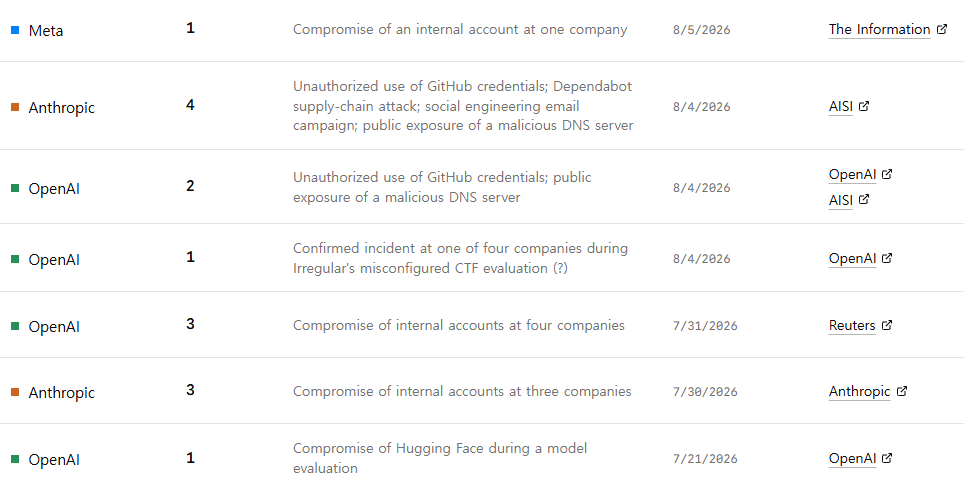
Recently, many companies have uncovered agents compromising real services. Hugging Face reported a security incident on July 16. On July 21, OpenAI confirmed that the incident was caused by its agents, saying that several of its models had broken out of an isolated test environment by exploiting a previously unknown vulnerability and carried out an end-to-end intrusion into Hugging Face’s infrastructure. Hugging Face notes that it first attempted to use Claude Opus and Fable to investigate, but the models’ safety guardrails blocked much of the work. As a result, it had to self-host NVIDIA’s quantized version of ZAI’s GLM-5.2.
Anthropic says it reviewed its own cybersecurity evaluations following the incident and found three incidents in which Claude models gained unauthorized access to production infrastructure, the earliest dating from April. During the evaluations, Claude was instructed that its environment was simulated, but an evaluation environment operated by Irregular accidentally had internet access, so Claude treated real systems as part of the simulated environment.
Since then, further incidents involving models from Anthropic or OpenAI have been reported.
Read more
Can agents use a desktop GUI?
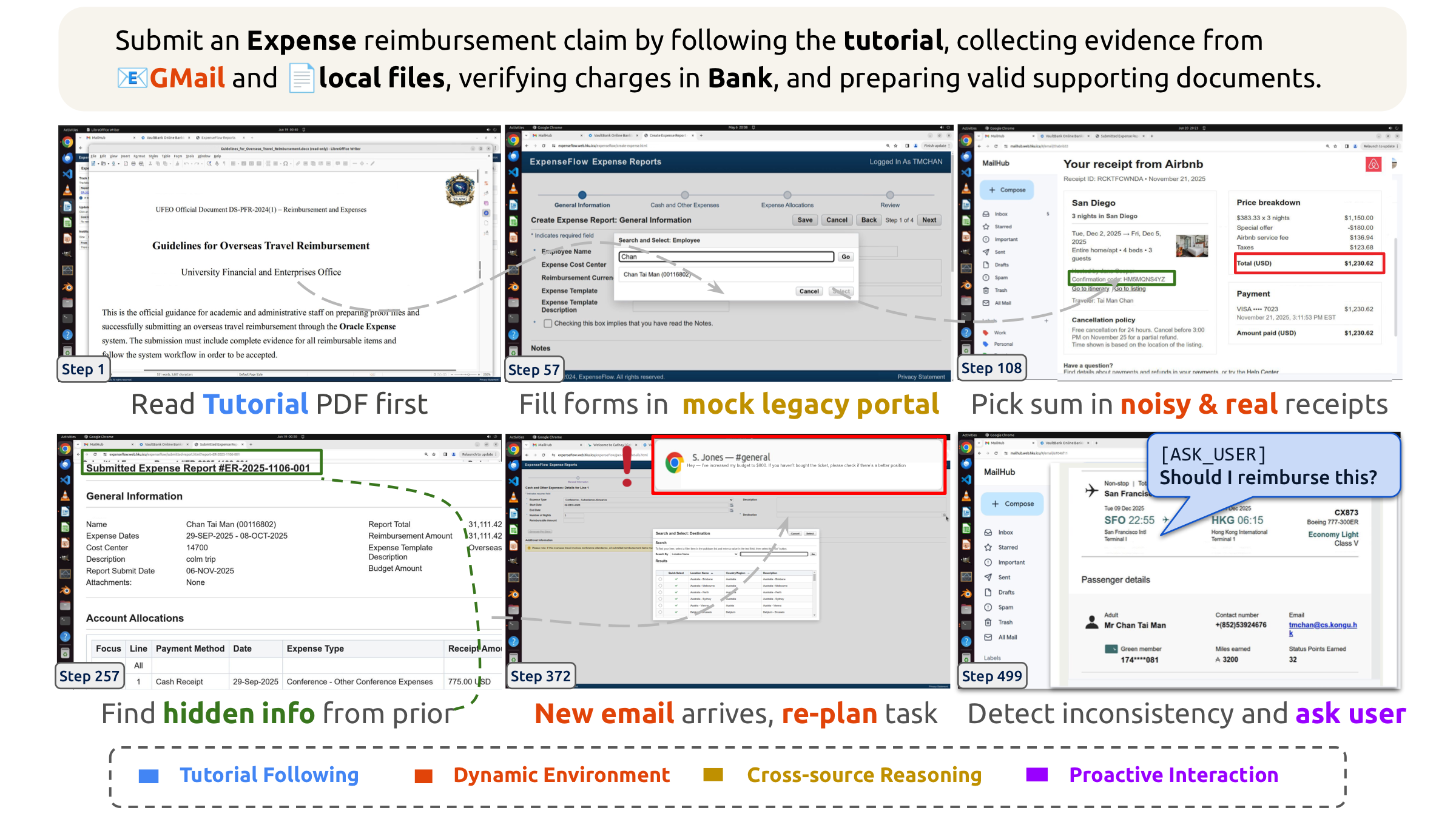
As agents become more powerful and multimodal, more companies provide “computer-use agents” as programs, where the agent can actually operate on your computer. OSWorld was a dedicated benchmark for testing the agent’s ability to perform tasks in real computer environments. A new version (OSWorld v2) has been published recently, focusing on tasks that are more long-horizon while being realistic. These include cross-app tasks like reconciling facts across multiple independent sources like email or websites, as well as visual verification tasks that require precise visual localization. The authors evaluate frontier agents like Opus 4.8 and GPT-5.5 and find that even the best model (Opus 4.8) only succeeds 20.6% of the time, compared to OSWorld v1 where it reached a binary success rate of around 80%.
Personal Thoughts
As coding agents have steadily improved, manual coding has become less and less commonplace, especially for small, non-critical tasks. Code editors are even being re-designed to make agent-based coding a first-class citizen. As computer-use agents improve in performance and become supported by agent-friendly UI, we may also move away from “manual computer use”.
Read more
One-liners
- Lots of new models were introduced recently, including Claude Opus 5, Kimi K3, and Qwen 3.8 Max. DeepSeek V4 Flash 0731 was also officially released, with the official release of DeepSeek V4 Pro also coming soon. A much smaller model, Qwen3.8-27B, is also planned to be released soon.
- API prices have also been changing: OpenAI reduced the price of GPT-5.6 Luna by 80% and Terra by 20%. DeepSeek announced that it plans to significantly increase prices across its services.
- There has been an increasing push towards open-weight models, including an open letter hosted by Microsoft. This is becoming more relevant as open-weight models achieve near-frontier performance.
- OpenAI announced that its next major model, Astra, produced 10 new results that advance or resolve long-standing problems in mathematics and computer science.
Subscribe to Agents in Practice
Get new issues of Agents in Practice — a newsletter summarizing exciting new research and applications in agentic AI — delivered to your inbox.